Mineral Rights Land Purchase: What to Know
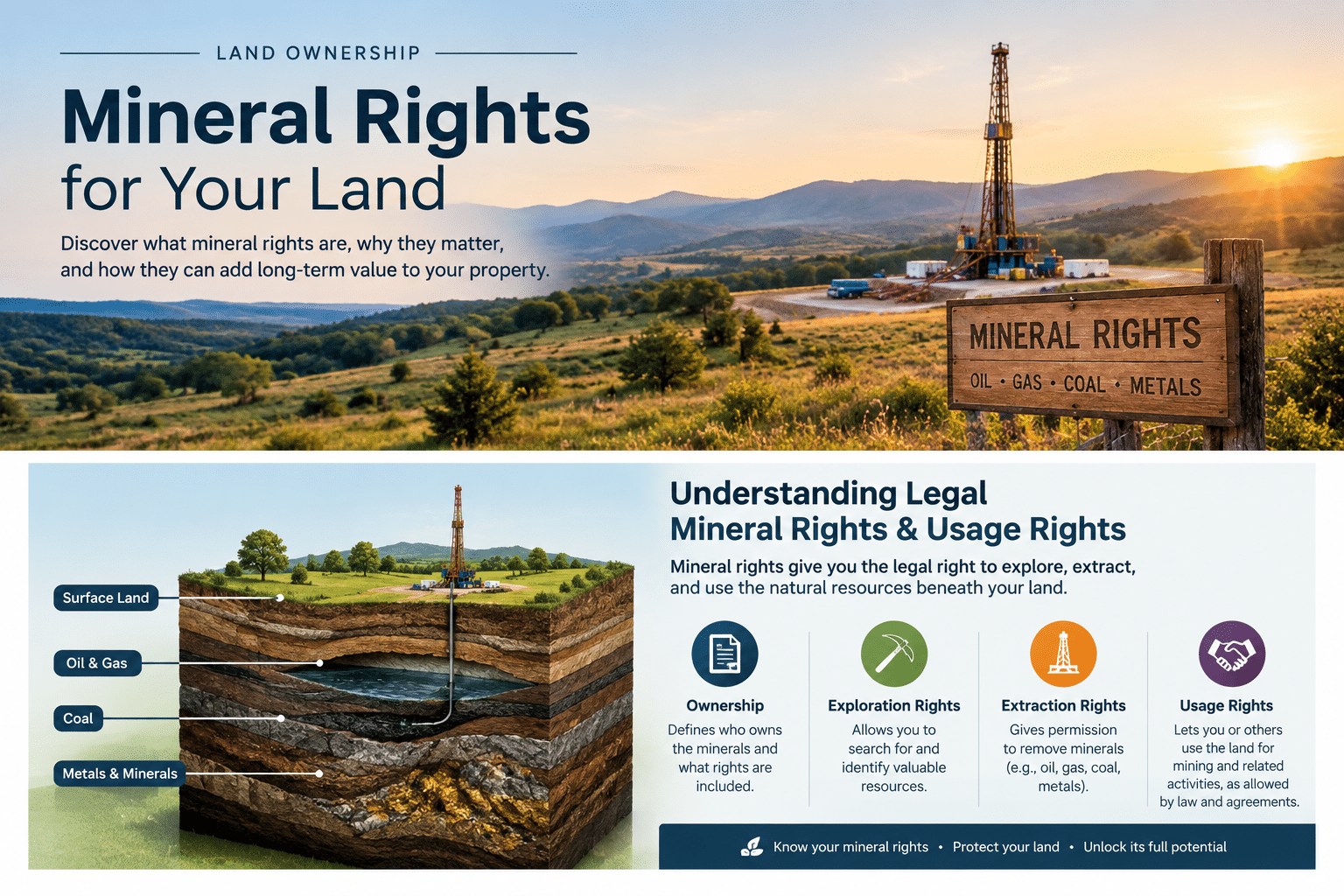
Buying rural land doesn’t automatically hand you the oil, gas, coal, or anything else sitting underneath it. Mineral rights are the legal rights to explore for and extract resources beneath the land, and they are treated as property separate from the surface A mineral rights land purchase is a separate question from buying the surface, and I’ve seen plenty of buyers assume the deed covers everything below their boots when it doesn’t. Sometimes it does. Sometimes a rancher three owners back sold or kept the minerals and never told anyone, and that reservation just sits in the county records waiting to surprise you.
If you’re asking “do I own mineral rights” on a piece of land you’re about to buy, or you already own acreage and aren’t sure what’s below it, this is written for you. It’s for anyone buying rural, recreational, or ag acreage who wants to know what they’re actually getting before they sign anything not after a landman shows up asking for surface access.
I’ll walk through how surface and mineral rights get split apart, why severed mineral rights are the risk most buyers never check for, how to confirm what you actually own before you close, and what your real options are if you end up holding minerals yourself: lease them, sell them, or just sit on them.
Mineral Rights on land
Mineral rights are the legal right to explore, extract, and profit from whatever’s under the ground oil, gas, coal, gold, gravel, whatever the deed language covers. These rights constitute real property in the same manner as surface land, and may be owned, sold, leased, or devised separately from the ownership of the surface estate. Before you can answer “do I own the minerals on my land,” you need to understand that the two are treated as separate legal estates, not one package deal.
Surface Rights vs. Mineral Rights Explained
Owning the surface doesn’t automatically mean you own the minerals underneath it. Land law splits a parcel into two estates: the surface estate and the mineral estate. They usually travel together on a deed, but they don’t have to. A seller, or someone five owners back, can sever the mineral estate and sell it, lease it, or will it to someone else entirely, leaving you with the dirt and grass but not what’s below it. That’s the whole mineral rights vs property rights distinction in a nutshell — property rights is the umbrella, and mineral rights is one stick in that bundle that can be pulled out and handed to somebody else.
Mineral rights don’t expire just because nobody’s using them, in most states. Oil, gas, and coal can sit untouched for decades and the mineral owner’s claim stays valid. A handful of states have dormant mineral statutes that can revert long-unused mineral interests back to the surface owner after a set period of inactivity, but the rules, notice requirements, and timelines vary a lot by state. I wouldn’t assume your state has one, or that it applies to your parcel — confirm it with a title company or the county clerk/recorder before you count on it.
A mineral estate also isn’t an all-or-nothing block that one person either holds entirely or doesn’t hold at all — it can be split into several different interests, each with its own rights and limits. I’ll get into exactly how that works, and the different ways a mineral interest can be structured, further down. For now, the main thing to take from the surface/mineral split is this: whoever holds the mineral estate generally has the legal right to access your surface to develop it, regardless of who owns the dirt on top.
| Right | Surface Owner Can Typically | Mineral Owner Can Typically |
|---|---|---|
| Use of land | Build, farm, graze, live on it | Access it to explore and extract minerals |
| Selling/leasing | Sell or lease the surface only | Sell or lease mineral interest separately |
| Control over drilling | Limited, under surface use agreements | Can drill, dig, or build access roads |
| Royalties | None unless negotiated | Entitled to royalties from production |
This is illustrative only actual rights depend heavily on the state and the specific deed language, so verify with a title company or attorney.
How Severed Mineral Rights Can Catch Rural Land Buyers Off Guard
If a previous owner kept the mineral rights, the mineral owner may be allowed to enter your land to drill, dig, or build a road. In many states, you can only negotiate a surface use agreement. Few buyers hear about this risk at closing. That is why you should find out who owns the mineral rights before you buy.
The type of ownership matters. A fractional NPRI holder living far away is mostly a paperwork problem. A working interest operator with trucks already on your land is a bigger problem, because the equipment is there whether you agree or not.
Legal Considerations and Due Diligence Before You Buy
A few legal points trip buyers up more than anything else, and I’d run through all of them before you sign:
- Reservation language in the deed controls everything. Vague or outdated wording from decades-old deeds can be read differently than the seller or even the title company assumes — have an attorney interpret anything ambiguous rather than guessing.
- Existing leases run with the mineral estate, not the surface owner. If minerals are leased to an operator, that lease generally survives your purchase of the surface and you inherit the surface use obligations that come with it.
- Surface use agreements are negotiable even when you don’t own the minerals. Spelling out access roads, setback distances, timing, and damage compensation in writing protects you far more than relying on state default rules.
- Dormant mineral statutes exist in some states and can revert long-unused mineral interests to the surface owner after a set period, but the notice requirements and timelines vary enough that I wouldn’t rely on one applying to your parcel without confirming it with a title company or attorney first.
- Heirship and probate gaps show up constantly in older mineral records. If the last recorded mineral owner died without a clean probate, the real current owner might be a dozen heirs who’ve never been formally identified — which makes both negotiating a lease and buying the interest a slower process than people expect.
Steps to Confirm Mineral Ownership Before You Close
Finding out who owns what isn’t complicated, it just takes a few extra steps most buyers never bother with. Run this before closing:
- Order a mineral title search, or ask the title company handling your purchase to run one alongside the standard title work.
- Pull the deed history at the county recorder or courthouse and look specifically for mineral or royalty deed filings, not just the surface conveyances.
- Read the current deed line by line for reservation language — anything like “excepting and reserving all oil, gas, and other minerals” means the seller isn’t passing them to you.
- Ask whether an existing warranty deed actually warrants the mineral title or carves it out.
- Check for any recorded oil and gas leases or surface use agreements tied to the parcel, even if no drilling has happened yet.
As for how to get mineral rights on your property if they’re already severed — you don’t get them by default, ever. You have to track down whoever currently holds them and buy that interest separately, if they’re even willing to sell. That usually means running a chain of title on the mineral estate itself, which can lead you through several heirs before you find someone with authority to sign. In Texas especially, courthouse indexing and mineral records work differently county to county, so confirm the process locally rather than assuming it matches what you’ve seen elsewhere.
Should You Lease, Sell, or Buy Mineral Rights on Your Property?
There’s no single right answer here, and anyone who tells you there is hasn’t walked enough of these deals. The right move depends on which mineral interest you actually hold (unified, severed, fractional, NPRI, or working interest — covered above), how badly you need cash now versus later, and whether anyone’s even drilling in your area. If you skipped past the earlier section on ownership structures, go back and figure out which bucket you’re in before you call a landman, because the answer changes everything about what a lease or sale is worth and who you’re negotiating with.
Lease, Sell, or Buy: How Each Works
Leasing keeps you as the mineral owner and pays you a royalty only if something actually gets produced — you keep the long-term upside but you might collect nothing for years. A lease typically runs on four pieces:
- a bonus payment up front,
- a royalty percentage on future production,
- a lease term with an option to renew,
- and surface use terms spelling out where equipment can go.
Selling hands you get a lump sum now but permanently give up any claim to what’s produced later. Leasing makes sense if you need cash right now or think drilling will never happen. But it's a bad deal if a well gets drilled later and you stop getting royalty payments.
Mineral rights can be bought together with land. They can also be bought separately in their own deal. Each one gets its own appraisal and deed. Before investing, check the lease history, the operator, and the production numbers.
One wrinkle worth flagging here: ownership is frequently fractional. A hundred-acre tract might have mineral rights split among a dozen heirs, each holding an undivided interest expressed in net mineral acres. If you’re the one leasing or selling, you may only own a sliver, and every co-owner’s signature, or at least formal notice to them, can matter depending on the state and the lease structure.
Legal Considerations and Due Diligence Before You Sign Anything
Every lease, deed, or purchase agreement has language in it that quietly decides how much money you see and when. Run through this before you sign:
- Get a professional appraisal or division order review so you know what the interest is actually worth, not what the other side tells you it’s worth.
- Verify whoever’s on the other side of the deal — landman, operator, buyer — is who they claim to be and actually has authority to sign.
- Check the habendum clause in any lease, which sets the primary term and the conditions that keep the lease alive past it.
- Look for pooling or unitization clauses, which let an operator combine your tract with neighboring ones — this affects how your royalty gets calculated.
- Confirm whether the lease has a free use clause letting the operator use surface resources like water or gravel at no extra cost to them.
- Ask about delay rental payments if drilling doesn’t start right away, and when those payments stop or convert to royalty.
- Check production records and lease history on the parcel through the state oil and gas regulatory agency before buying or selling an existing interest.
- Have an attorney draft or review the mineral or royalty deed itself — these documents run with the land, and a vague legal description or missing reservation language causes real problems later.
My opinion, flatly: don’t sign a lease or a mineral deed without a landman, title attorney, or mineral appraiser reviewing it first. Once it’s signed, undoing it is close to impossible.
The Bottom Line
Buying land doesn’t automatically mean you own what’s under it. Surface rights and mineral rights are two different things. Someone who owned the land decades ago might have kept the mineral rights. That means a stranger could have the legal right to drill, dig, or build a road on your property today. The good news is that this is easy to check before you buy and painful to discover after.
Order a mineral title search, read the deed’s reservation language carefully, and look for recorded leases or surface use agreements before you close. If you already own the minerals, you have three choices: lease them, sell them, or keep them. Pick based on whether you need cash now and what's happening in your area. If you own only a fraction of the minerals, you might have to share the decision with other owners.
Rules vary widely by state and by deed, so have a title company or an attorney confirm what you actually own. A few hundred dollars of due diligence now can save you from a very expensive surprise later.
Further reading
Frequently Asked Questions
Do mineral rights transfer with the property when I buy land?+
Not automatically — check the deed and run a mineral title search, because mineral rights transfer only if they weren't already severed and sold off by a previous owner.
Are mineral rights considered real property?+
Yes, in most states mineral rights are treated as real property and can be owned, sold, leased, or inherited separately from the surface.
What happens to mineral rights if I buy owner-financed land?+
It depends entirely on the deed and contract, so ask the seller directly whether mineral rights are included, reserved, or already severed before you sign anything or put money down.
What is mineral rights on property?+
Mineral rights are the legal right to explore for, extract, and profit from resources underground, such as oil, gas, coal, gravel, and in some states gold. They are a form of real property that can be owned separately from the surface land.
What is the difference between mineral rights and property rights?+
Property rights are the whole bundle of rights you hold in land. Mineral rights are one part of that bundle and can be separated from the rest.
How do I invest in mineral rights?+
You can buy mineral or royalty interests as a standalone investment. Before buying, check the lease history, the operator, and production numbers.