What is a Warranty Deed on Property
When you buy a house, ownership doesn’t transfer with a handshake — it involves a series of legal documents that make the sale official. Among property documents, Warranty deeds play a central role. It’s the document that actually transfers ownership from Grantor and Grantee, and it comes with a specific set of guarantees. The word “warranty” sounds reassuring, but what exactly is it promising?
What Is a Warranty Deed?
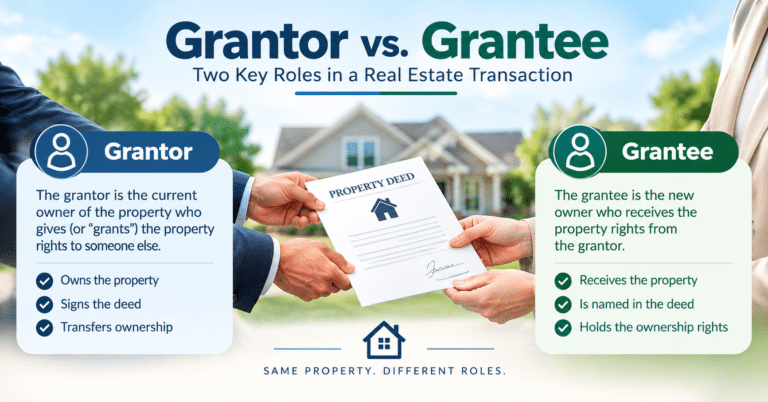
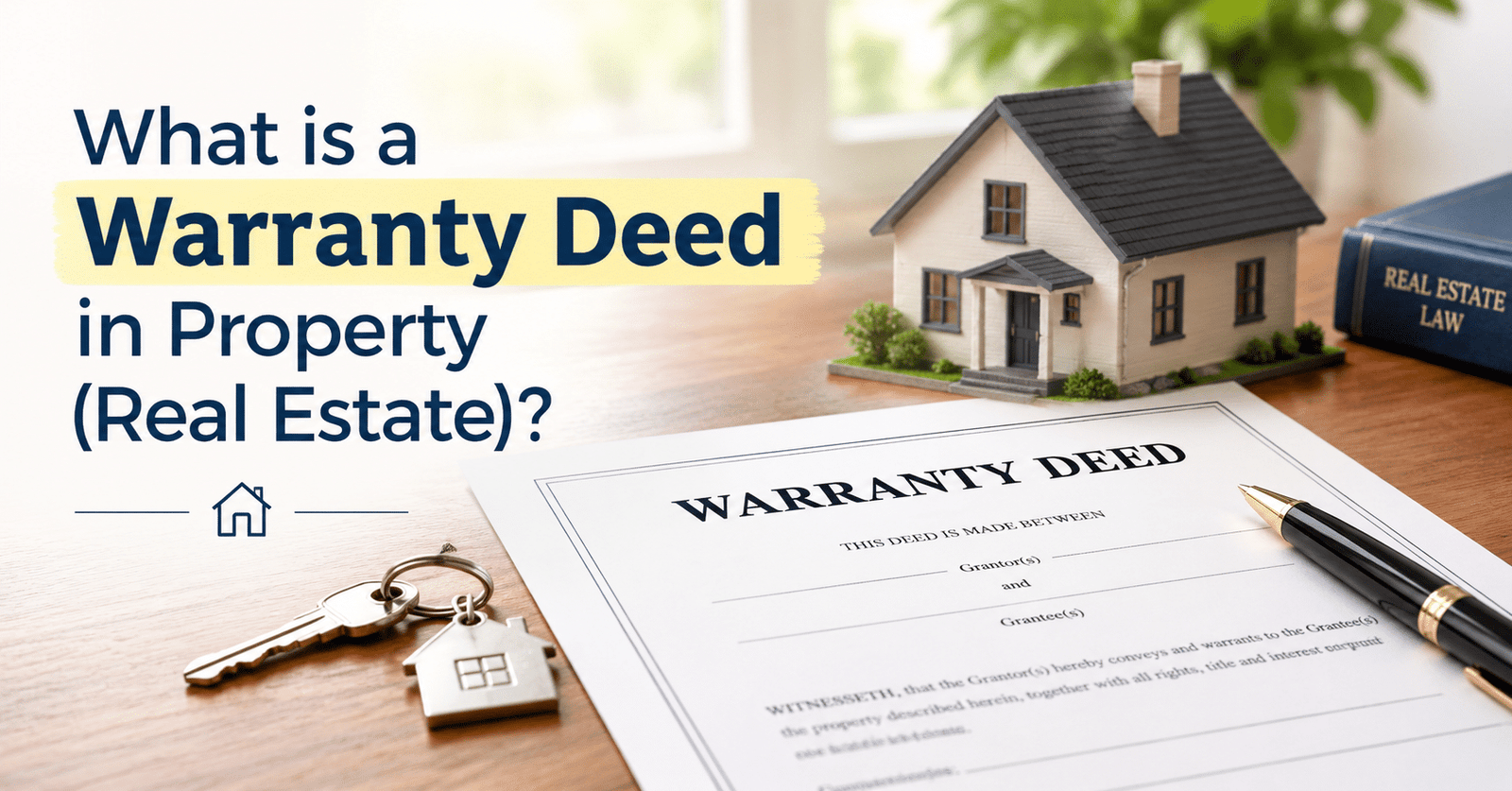
A warranty deed is a legal document that transfers real property ownership from a seller (grantor) to a buyer (grantee), with the seller guaranteeing the title is clear and free of liens or claims. This document promises no hidden claims exist unless disclosed in the deed itself.
It is the strongest and most protective deed type a buyer can receive. Other deed types only cover the seller’s own time owning the property. This guarantee covers the property’s entire history, not just the seller’s period of ownership.
Warranty deed typically covers issues like:
- Outstanding liens: unpaid debts owed by a previous owner that are legally tied to the property
- Undisclosed claims or encumbrances: third-party rights that could limit how you use the property, such as an easement letting a neighbor cross your land, or a utility company’s right-of-way
- Unresolved legal or financial issues: including unpaid property taxes, overdue HOA (Homeowners Association. )fees, old mechanic’s liens from contractors, or inheritance disputes tied to the home
So warranty deed’s entire purpose is to make sure that when you buy a home, you’re getting it with no strings attached and no unpleasant surprises waiting down the line.
Important Elements of a Warranty Deed
Warranty Deed includes several key components that make it legally valid and enforceable. Here’s what typically goes into one.
Grantor and Grantee Names: The grantor is the seller transferring the property, and the grantee is the buyer receiving it. Both parties must be clearly identified by their full legal names.
- Legal Property Description: A precise, official description of the property (not just the street address), often including lot numbers, boundaries, or survey references, to avoid any confusion about what’s being transferred.
- Covenants of Title: These are the seller’s formal promises, including that they legally own the property, have the right to sell it, and that the title is free of undisclosed claims or defects.
- Consideration: This states what the buyer is giving in exchange for the property, usually the purchase price, confirming the transfer is a legitimate sale rather than a gift or transfer under duress.
- Signatures: The deed must be signed by the grantor (seller) to be legally binding; some states also require the grantee’s signature or witnesses.
- Notarization: A notary public verifies the identities of the signing parties, which is required in most states before the deed can be legally recorded.
- County Recording Information: Once signed and notarized, the deed is filed with the local county recorder’s office, making the ownership transfer part of the public record.
Together, these elements ensure the deed holds up legally and gives the buyer real, enforceable protection if any ownership issues arise later.
Types of Warranty Deeds
There are two main types of warranty deeds in a real estate transaction. Not all warranty deeds offer the same level of protection.
General Warranty Deed
A general warranty deed guarantees clear title to the property for its entire history, not just the seller’s period of ownership. It protects the buyer against claims from any previous owner.
- The seller guarantees they own the property and have full legal right to sell it.
- The seller promises the property has no liens, debts, or claims. This covers the property’s entire history, not just their own ownership period.
- The seller agrees to defend the buyer’s title against future claims, even ones tracing back to previous owners.
Because it covers the full ownership timeline, this is the deed type most buyers hope to receive. It’s the standard in most traditional home sales
Special Warranty Deed
The grantor warrants that no title issues arose during their own period of ownership, but makes no guarantees about the time before.It offers a certain period of time and narrower protection to buyers . Here, the seller only guarantees.
- That they personally haven’t caused any title issues during their period of ownership.
- Nothing about what may have happened to the property’s title before they acquired it. Any older claims or defects are not covered by their promise.
This type is more common in commercial transactions, foreclosure sales, or transfers involving banks and estates, where the seller may not have full knowledge of the property’s earlier history
General vs. Special Warranty Deed
The difference between general and special warranty deeds matters because it determines how much risk the buyer takes on if a title problem surfaces later.
| General Warranty Deed | Special Warranty Deed |
Covers the property’s entire ownership history | Covers only the seller’s period of ownership |
Offers the buyer the highest level of protection | Offers moderate, more limited protection |
Seller guarantees clear title going all the way back | Seller guarantees clear title only during their own ownership |
Seller is responsible for title defects, even from previous owners | Seller is not responsible for defects that existed before they owned it |
Used mainly in traditional residential home sales | Used mainly in commercial deals, foreclosures, and estate sales |
Lower risk for the buyer | Higher risk for the buyer, since older title issues may not be covered |
How a Warranty Deed Works
Once an offer on a home is accepted, the transaction moves into a verification phase before any deed is signed. Here’s how the process typically unfolds
- Offer is accepted — The buyer and seller agree on terms, kicking off the closing process.
- Mortgage lender hires a title researcher — Before approving the loan, the lender wants assurance the property’s title is legitimate, so a title deed researcher is brought in.
- Public and historic records are searched — The researcher digs through county records, past ownership history, and legal filings to trace the property’s title back through time.
- Records are checked for issues — This search looks specifically for outstanding liens, encumbrances, or any unresolved third-party claims tied to the property.
- Title is declared clean — If no issues are found (or existing ones are resolved), the title is confirmed clear and ready for transfer.
- The deed is drafted — A closing agent or real estate attorney prepares the warranty deed, including the legal property description, sale price, and the seller’s covenants of title.
- The deed is signed at closing — Both parties finalize the transaction, the deed is signed and notarized, and ownership officially transfers to the buyer.
Once recorded with the county, the warranty deed becomes part of the public record. From that point on, the seller is legally responsible for defending the title if any past issue surfaces. This holds true even if the seller wasn’t aware of the issue at the time of sale.
How to Obtain a Warranty Deed
A warranty deed is obtained by hiring a real estate attorney or title company to draft it during the property sale. The seller signs the deed in front of a notary, and the buyer or their representative then files it with the county recorder’s office to complete the process.
A copy of the deed can be requested after closing for example, for refinancing or resale from the county recorder’s or clerk’s office where the property is located. The deed becomes part of the public record once it’s filed there.
What is difference between Warranty Deed and Title Insurance
Warranty Deed vs. Title Insurance
A warranty deed is a legal document that transfers property ownership while the seller promises the title is clear. while Title insurance is a policy that protects the buyer financially if a hidden title defect or undiscovered claim surfaces later.
A warranty deed puts responsibility on the seller. If a title problem comes up, the buyer can hold the seller accountable. But this only works if the seller can still be found and has the money to pay.
Title insurance works differently. An insurance company backs it instead of the seller. It also covers more ground things like conflicting wills or unpaid tax liens. When a covered problem shows up, the insurer pays the buyer directly.
So warranty deed names who’s responsible. Title insurance guarantees payment even if that person can’t deliver.
What is the difference between a warranty deed and a quitclaim deed?
The main difference is warranty deed guarantees the seller has clear ownership, while a quitclaim deed transfers only whatever interest the seller currently holds with no guarantees attached.
With a quitclaim deed, the person transferring the property isn’t promising they fully own it. They’re not promising the title is free of claims but simply passing along whatever rights they may have.This is why quitclaim deeds are mostly used in non-sale situations ,like adding a spouse to a title after marriage, removing one after divorce, or transferring property between family members, where trust matters more than legal protection.
If you’re buying from someone you’re not related to, a warranty deed is the safer option. It confirms clear ownership and holds the seller accountable if problems come up later protection a quitclaim deed doesn’t provide.
Final Thoughts
At the end of the day, a warranty deed comes down to one thing: peace of mind. It confirms that the property you’re buying is legally yours, free of hidden claims, and that the seller stands behind that promise.
Understanding how it works — and how it compares to other deeds or title insurance — puts you in a stronger position at closing. And when questions come up, a good real estate agent or attorney can help make sure you’re fully protected.
Frequently Asked Questions
What's the difference between a warranty deed and a quitclaim deed?+
A warranty deed guarantees clear ownership and title protection; a quitclaim deed transfers only whatever interest the seller currently has, with no guarantees at all.
What are the risks of a special warranty deed?+
It only covers issues that happened during the current seller's ownership; any title problems from before they owned the property aren't covered, leaving the buyer exposed to older, undiscovered claims.
Do I still need title insurance with a warranty deed?+
Yes. A warranty deed only holds the seller accountable; it doesn't guarantee they can actually pay if a problem arises. Title insurance covers that gap by protecting you financially regardless of the seller's situation.
Where can I get a copy of my warranty deed?+
You can request one from the county recorder's or clerk's office where the property is located, since the deed is filed as part of the public record after closing.
What does a warranty deed not cover?+
It doesn't cover issues the deed specifically discloses upfront, nor does it protect against problems the seller can't be held liable for, such as if they can't be located or lack the funds to resolve a claim.
What does a warranty deed do for a buyer?+
It guarantees the seller has clear ownership and gives the buyer legal recourse to hold the seller responsible if a title issue surfaces after the sale.
What is an example of a warranty deed?+
A common example is a standard home sale, where the seller signs a warranty deed transferring the property to the buyer and guaranteeing clear title, free of liens or claims.
How much does a warranty deed cost?+
Costs typically range from $100 to $500, depending on attorney or title company fees and county recording charges.
Does a warranty deed prove ownership?+
Yes. Once recorded with the county, a warranty deed serves as legal proof that ownership has transferred to the buyer.
What is a warranty deed used for?+
Warranty deed used to transfer real property ownership from a seller to a buyer while guaranteeing the title is clear and free of past claims.