Deed vs. Title: What’s the Difference? (And Who Actually Holds Yours?)
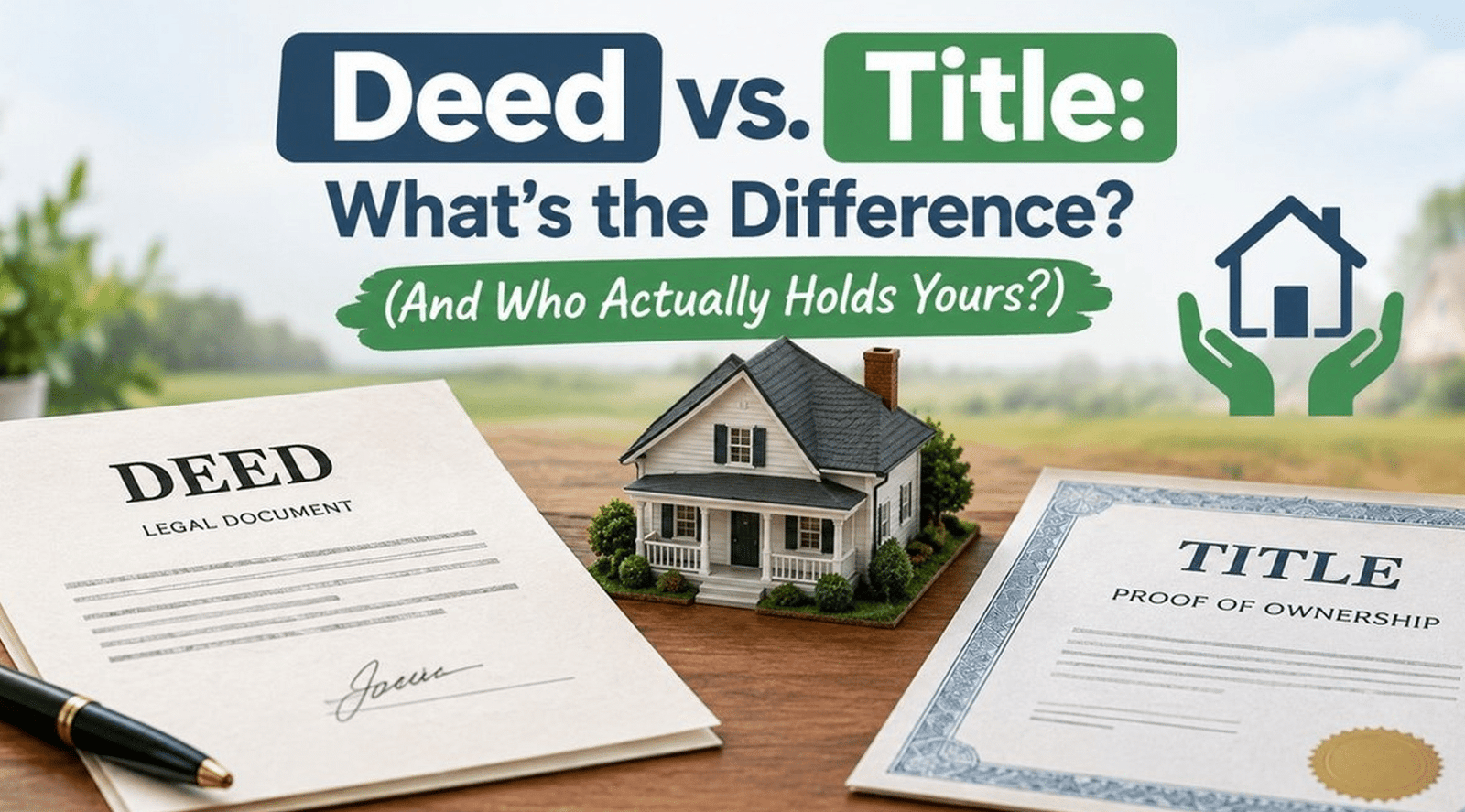
If you’re buying a home or a piece of land, you’ve probably seen the words “deed” and “title” used almost interchangeably — and that’s exactly where the confusion starts. They’re related, but they’re not the same thing. A deed is the physical, legal document that transfers ownership. A title is the legal concept of ownership itself — the bundle of rights that comes with owning real property.
In simple terms: the deed is the paperwork, and the title is what that paperwork proves you have. Understanding the difference matters, especially if you’re buying land through owner financing, where deed and title don’t always transfer the same way — or at the same time — as they do with a traditional mortgage.
What Is a Deed?
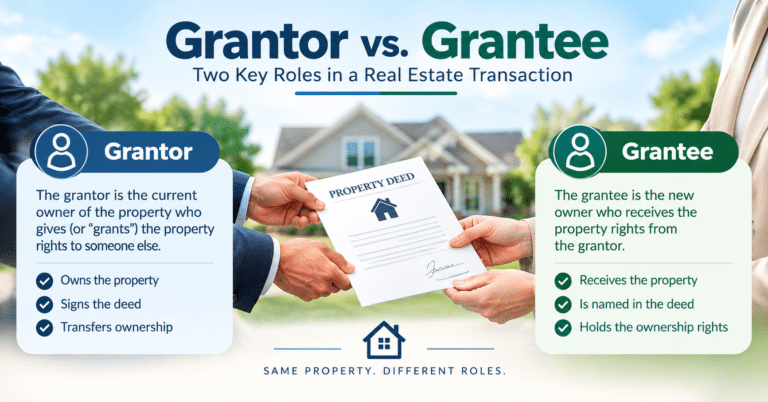
A deed is a written legal document that transfers ownership of real property from one party (the grantor, or seller) to another (the grantee, or buyer). To be valid, it has to include a legal description of the property, the names of the grantor and grantee, and the grantor’s signature, and it must be notarized and filed with the county recorder’s office. If those terms sound unfamiliar, our guide on grantor vs. grantee breaks down exactly who’s who in a property transfer, with examples.
Once a deed is signed, notarized, and recorded, it becomes part of the public record — permanent proof that ownership changed hands.
How to Get the Deed to Your House
If you need a copy of your deed, you don’t have to track down the original paperwork from closing. Every recorded deed becomes part of the public record, so you can:
- Identify the county recorder’s or clerk’s office where the property is located.
- Search their online records database using your name, address, or parcel number.
- Request a certified copy, which usually comes with a small recording or copying fee (typically $5–$25, depending on the county).
Most county offices now offer this online, so in many cases you can pull a copy in minutes without leaving home.
Types of Deeds (Warranty, Quitclaim, and More)
Not all deeds offer the same level of protection to the buyer. The four most common types are:
- General warranty deed — guarantees the title is clear for the property’s entire ownership history, not just the current seller’s time owning it. This is the standard for most residential home sales and offers buyers the strongest protection.
- Special warranty deed — the seller only guarantees the title was clear during their ownership, with no promises about what happened before. Common in commercial deals, foreclosures, and estate sales.
- Quitclaim deed — transfers whatever interest the seller currently holds, with no guarantees at all. Typically used between family members, spouses, or in non-sale transfers, rather than arm’s-length purchases.
- Deed in lieu of foreclosure — used when a borrower voluntarily transfers property back to their lender to avoid the foreclosure process.
For a full breakdown of general vs. special warranty deeds, including a side-by-side comparison table, see our detailed guide: What Is a Warranty Deed on Property.
What Is a Property Title?
A title isn’t a physical document — it’s the legal concept representing your ownership rights to a property. When people ask to see “the title,” what they usually mean is a title report or title insurance policy, which documents the ownership history and confirms there are no competing claims.
What Rights Come With a Property Title? (The “Bundle of Rights” Explained)
Owning title to a property means you hold what’s known as the “bundle of rights” — five distinct legal rights that come with ownership:
- Right of possession — the legal right to occupy the property.
- Right of control — the ability to use the property within the law and any applicable zoning or deed restrictions.
- Right of exclusion — the ability to keep others off your property.
- Right of enjoyment — the right to use the property without interference.
- Right of disposition — the right to sell, lease, gift, or transfer the property.
When any of these rights is limited — say, by an easement, a lien, or an HOA restriction — it typically shows up during a title search, which is why that step matters so much before closing.
Who Holds the Title to My House?
If you bought with a mortgage, you — the buyer — hold title to the property, not the lender. The lender’s interest is secured through a lien (or, in some states, a deed of trust), which gives them the right to foreclose if you stop making payments. But legal ownership, and the title that represents it, is yours from the day you close. This is one of the most commonly misunderstood parts of homeownership, since people assume the bank “owns” the house until the mortgage is paid off — it doesn’t; it just holds a claim against it.
Deed vs. Title for a House: Side-by-Side Comparison
| Deed | Title | |
|---|---|---|
| What it is | A physical legal document | A legal concept of ownership |
| What it does | Transfers ownership from seller to buyer | Represents the rights that come with ownership |
| Where it lives | Filed with the county recorder’s office | Confirmed through a title search or title insurance policy |
| Can you lose it? | No — once recorded, it’s permanent proof of a past transfer | Yes — title can be challenged by liens, claims, or competing ownership interests |
Deed vs. Title in Owner-Financed Land Deals
Here’s where things work a little differently than a typical mortgage purchase — and it’s especially relevant if you’re buying land through owner financing, like the properties listed on Landapaloozas.
A bank loan and an owner-financed purchase don’t necessarily hand over the deed on the same timeline. Finance a home through a bank, and you typically walk away from closing holding the deed outright, while the lender’s claim sits quietly in the background as a lien until the loan is paid off. Buy land from a private seller instead, and that seller is stepping into the bank’s role — so exactly when the deed lands in your hands comes down to how they’ve structured the sale:
- Deed at closing, seller holds a lien — Many owner-financed land sales, including how Landapaloozas structures its deals, transfer the deed directly to the buyer at the time of purchase, with the seller retaining a lien on the property (similar to a mortgage) until the balance is paid in full. This means the buyer holds title and full ownership rights from day one, while the seller’s interest is protected the same way a bank’s would be.
- Contract for deed (land contract) — In this alternative structure, used by some sellers, the buyer makes payments over time but doesn’t receive the deed — and therefore doesn’t hold title — until the full purchase price is paid off. This puts more risk on the buyer, since a missed payment can sometimes mean losing the property without ever having held clear title.
These two setups aren’t interchangeable, so before signing with any land seller, get a straight answer to two questions: when does the deed actually change hands, and what type of deed will it be? At Landapaloozas, buyers receive their deed and hold recorded title as soon as the purchase is complete — ownership is real and on file with the county from day one, not something you’re working toward by finishing out your payments.
Do I Need Both a Deed and a Title When I Have a Mortgage?
Yes — and this applies whether you’re financing through a bank or through owner financing. The deed is the one-time event that transfers ownership to you. The title is the ongoing legal status of that ownership, which your lender protects through a lien rather than by holding the deed itself. You’ll want to keep a copy of your deed in a safe place (it’s also on file with the county), and if you ever refinance, sell, or pass the property to an heir, both concepts come into play again.
How to Get a Copy of Your House Deed or Title
To get a copy of your recorded deed, contact the county recorder’s or clerk’s office where the property is located and request a certified copy — most offices allow you to search and order online. To confirm your title status, you can order a title search or title report through a title company, which will show the current owner of record and flag any liens, judgments, or claims against the property.
Final Thoughts
A deed and a title work together, but they’re not interchangeable: one is the document, the other is the ownership it represents. If you’re buying land with owner financing, it’s worth asking upfront exactly when and how the deed transfers, since that determines when you actually hold title to the property.
Looking for owner-financed land where the deed and title transfer to you at closing? Browse available properties on Landapaloozas, or reach out with questions about how our financing process works.
Frequently Asked Questions
What does a house deed look like?+
A deed is typically a one-to-two-page document that includes grantor and grantee names, a legal description of the property, the sale price, the seller’s signature, and a notary stamp, followed by county recording information.
What does a home title look like?+
Since title isn’t a physical document, there’s nothing to “look like” in the way a deed is — what you’ll typically see is a title report or title insurance policy, which lists the current owner of record and any liens or claims against the property.
Is a deed the same thing as a title?+
No. A deed is the document that transfers ownership; a title is the legal concept of ownership itself, along with the rights that come with it.
Who holds the title to my house if I have a mortgage?+
You do. Your lender holds a lien against the property, not the title itself, giving them the right to foreclose if payments aren’t made — but you remain the legal owner.
How do I get the deed to my house?+
Request a certified copy from the county recorder’s or clerk’s office where the property is located, using your name, address, or parcel number to search their records.
Do I get the deed right away with owner-financed land?+
It depends on how the seller structures the deal. Some sellers transfer the deed at closing and hold a lien until the balance is paid (similar to a mortgage) — this is how Landapaloozas structures its sales. Others use a contract for deed, where the deed doesn’t transfer until the full price is paid off. Always confirm which structure a seller is using before you buy.