Grantor vs Grantee – Complete Guide
Every property has an owner, and every sale or transfer legally means that ownership is passed from one person to another. Real estate documents use specific terms to identify each party in that transfer, and two terms you’ll often come across are grantor and grantee. These terms can sound confusing. Let’s break down what a grantor and grantee mean and understand the key differences between them.
What is a Grantor and a Grantee?
In a property transfer, there are always two parties grantor one giving up ownership, and grantee, one receiving it. These roles appear not just in home sales, but in gift deeds, inheritance transfers, trusts, and mortgage documents anywhere ownership legally changes hands.
Define Grantor
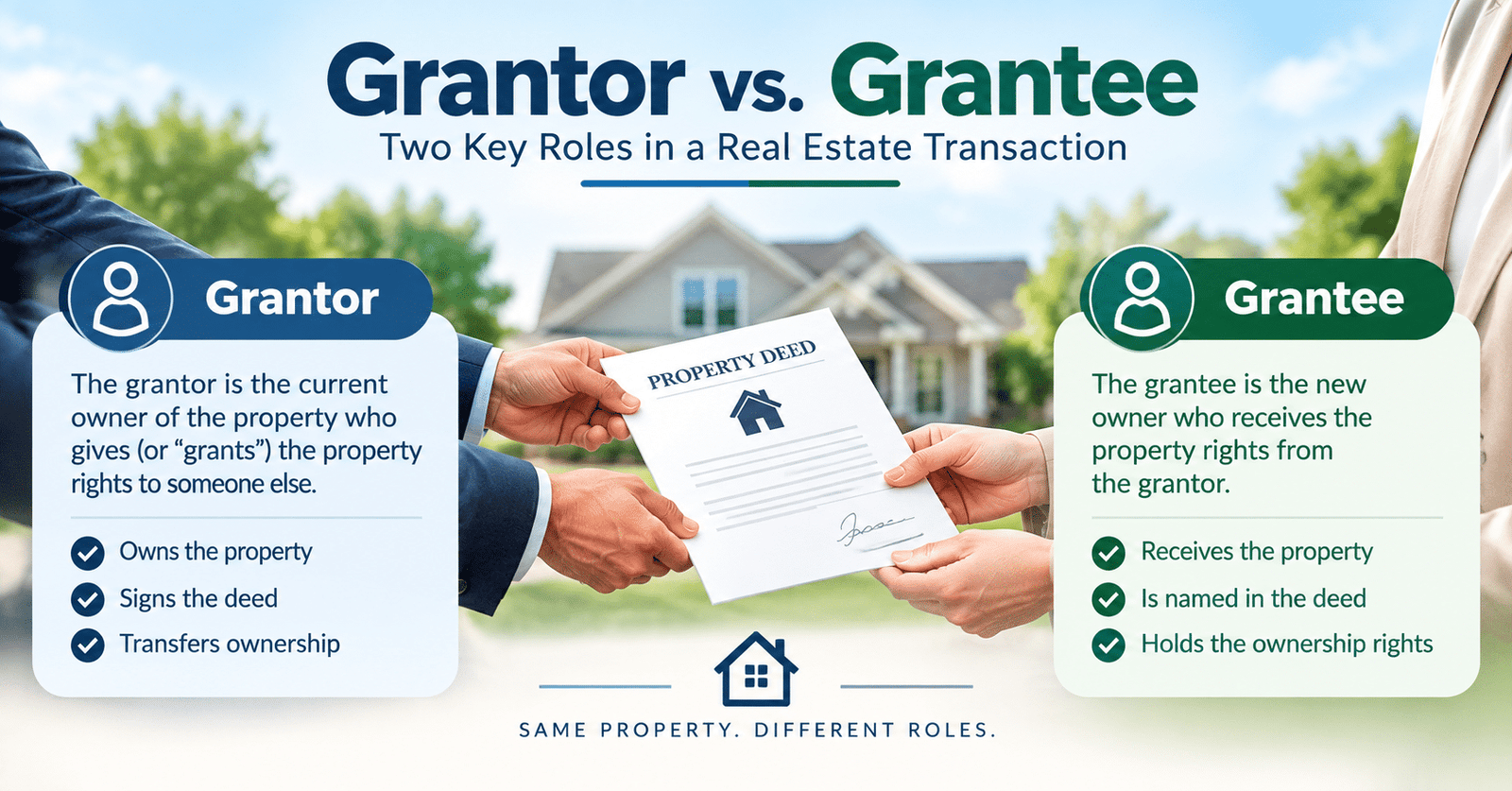
A grantor is the current legal owner of a property who transfers their ownership rights to another party. This transfer is formalized through a deed, the legal document that records the change in ownership.A grantor can be an individual a couple a business entity a trust or estate. For example, if you’re selling your home, you’re the grantor ,granting your ownership rights to the buyer.
Define Grantee
A grantee is the party who receives ownership rights once a property transfer is complete. In a standard home sale, the grantee is simply the buyer. Once the transaction closes, the grantee becomes the new owner of record, with their name appearing on the deed. Like grantors, grantees can be individuals or entities.
Grantor vs. Grantee: Key Differences
| Aspect | Grantor | Grantee |
| Role | Gives up ownership or rights | Receives ownership or rights |
| Typical Example | Seller in a home sale | Buyer in a home sale |
| Found On | Deeds, titles, mortgage documents | Deeds, titles, mortgage documents |
| Responsibility | Must have legal authority to transfer the property | Must accept the property along with any terms attached |
| Signs the Deed? | Yes, typically required | Usually not required |
Why It Matters
- Reading legal documents correctly — These terms show up constantly in deeds, contracts, and mortgage paperwork, so knowing which one applies to you avoids confusion.
- Preventing ownership disputes — Mixing up the roles can lead to title errors or disagreements over who actually holds rights to a property.
- A smoother closing –Knowing your role ahead of time helps ensure the right person signs the right documents at the right stage of the transaction.
Examples of Grantor vs Grantee
The grantor and grantee relationship isn’t limited to home sales, it shows up in other legal arrangements too.
- Landlord and tenant: In a lease, the landlord (grantor) temporarily grants the tenant (grantee) the right to occupy and use the property in exchange for rent, without transferring actual ownership.
- Trust arrangements; When someone creates a trust, they are the grantor (also called the “settlor” or “trustor”) .They place their assets or property into the trust. The grantee, in this case, is the trust itself or the beneficiary who eventually receives the assets, depending on how the trust is structured.
- Gift deeds: When property is given away rather than sold, the person giving the gift is the grantor, and the person receiving it is the grantee even though no money changes hands, the legal transfer of ownership works the same way as a sale.
- Easements: If a property owner allows a neighbor (or a utility company) the right to use part of their land for example, for a shared driveway or utility lines . The property owner is the grantor, and the party receiving that right of use is the grantee.
- Power of attorney (real estate transactions): When someone authorizes another person to sign documents on their behalf during a property transaction, the person granting that authority is the grantor, and the person receiving the authority to act is the grantee.
- Lender and borrower: In a mortgage, the property owner grants the lender a security interest in the property as collateral for the loan. Depending on the state and type of mortgage document used, either party can be referred to as the grantor or grantee, which is why this relationship often causes confusion.
What is the Relationship Between a Grantor and a Grantee in Real Estate?
In most real estate deals, The grantor and grantee relationship is defined entirely by the legal documents that transfer the property between them. Since this relationship exists only on paper, understanding titles and deeds is key to understanding how it works.
Transferring Title or Deed
The connection between a grantor and grantee is formalized through two key legal concepts: title and deed. Title represents the legal right to own a property, while a deed is the physical (or recorded) document that actually transfers that right from grantor to grantee.
Before a sale closes, a title search is typically performed to confirm the property’s ownership history and check for any outstanding liens, unpaid taxes, or competing claims. This protects the grantee from inheriting problems they didn’t know existed. Many buyers also purchase title insurance, which provides financial protection if an issue with the title surfaces after the sale is complete.
Common Types of Deeds
The deed creates a legal relationship between grantor and grantee . The type of deed used in a transaction determines how much protection the grantee receives, and how much responsibility the grantor takes on. Here are the four most common types.
General Warranty Deed
This offers the grantee the strongest protection available. The grantor guarantees the property is free of liens or claims not just during their own ownership, but throughout the property’s entire history .It also defends the grantee if a claim arises later.
Special Warranty Deed
This deed only guarantees the property was free of issues during the grantor’s own period of ownership. It makes no promises about what happened before that. It’s commonly used when the seller only recently acquired the property, such as a bank selling a foreclosed home.
Deed in Lieu of Foreclosure
This is used when a homeowner facing foreclosure voluntarily transfers ownership to their lender instead of going through the foreclosure process. It’s a somewhat unique case, since the grantor and grantee (homeowner and lender) already had an existing relationship through the mortgage before this deed was signed.
Special Purpose Deed
This type is used when someone signs a deed in an official or representative capacity, rather than as the personal owner of the property — for example, an executor settling an estate or a sheriff handling a court-ordered sale. Because the signer isn’t the true owner, they don’t personally guarantee the title. If a title dispute arises, the grantee may have limited recourse, since the individual who signed isn’t personally liable.
Grantor And Grantee In Mortgages
In a typical mortgage, roles can get a little confusing because the terminology flips depending on the context. When a homeowner takes out a mortgage, they are actually acting as the grantor — they’re granting the lender a security interest in the property as collateral for the loan. The lender, in this case, is the grantee, since they’re receiving that interest.
- Some states, however, don’t use a traditional mortgage structure at all. Instead, they use a deed of trust. In this setup:
- The borrower is still the grantor — they grant a security interest in the home.
- The lender becomes the beneficiary rather than the grantee.
- A neutral third-party trustee holds the legal title to the property until the loan is fully paid off.
Because the terms shift slightly between mortgage states and deed-of-trust states, it’s worth checking which system applies so you know exactly who holds what right at each stage of the loan.
Conclusion
At the end of the day, “grantor” and “grantee” simply describe who’s giving up ownership and who’s receiving it, whether that’s in a home sale, a gift, a trust, or a mortgage. Knowing which role you play helps you understand the paperwork you’re signing, avoid confusion during closing, and protect your interests in any property transaction. Whenever you’re unsure, a quick look at the deed will usually tell you exactly who’s who.
Frequently Asked Questions
What Is A Grantor In Real Estate?+
A grantor is the person or entity that transfers ownership of a property to another party, such as a seller in a home sale.
What Is A Grantee In Real Estate?+
A grantee is the person or entity that receives ownership of a property, such as a buyer in a home sale.
Is the grantor the same as the owner?+
Yes, the grantor is the current legal owner of the property at the time of transfer.
What is the best deed for a grantee?+
A general warranty deed offers the grantee the most protection, since it guarantees clear title throughout the property's entire history, not just during the current owner's tenure.
What are the strongest and weakest deeds?+
The general warranty deed is the strongest, offering full protection against title issues. The quitclaim deed is the weakest, since it transfers whatever interest the grantor has without any guarantees about the title.
Who Has More Power, a Trustee or Beneficiary?+
A trustee has more power day-to-day, since they legally hold and manage the property or assets on behalf of the beneficiary. However, the trustee must act in the beneficiary's best interest, and the beneficiary retains the right to eventually receive the assets as outlined in the trust.
Who is the grantor on a quitclaim deed?+
The grantor on a quitclaim deed is the person transferring whatever ownership interest they currently have in the property, without guaranteeing that the title is free of issues.
What is a grant deed?+
A grant deed is a legal document that transfers property ownership from the grantor to the grantee, with a guarantee that the grantor hasn't already sold the property to someone else and that the title is free of undisclosed liens from their period of ownership.
When does the grantee own the property?+
The grantee legally owns the property once the deed is signed, delivered, and recorded this typically happens at closing.